
During the first half of 2026, HIVEMIND partners presented project-related work at conferences, workshops and research forums across Europe. Their contributions addressed dependable computing, Generative AI in software engineering, disaster response, language resources, autonomous driving and requirements engineering.
Generative AI and new software engineering practices
Xavier Franch Gutierrez from Universitat Politècnica de Catalunya contributed to ICSE 2026, CAIN 2026 and WSESE 2026.
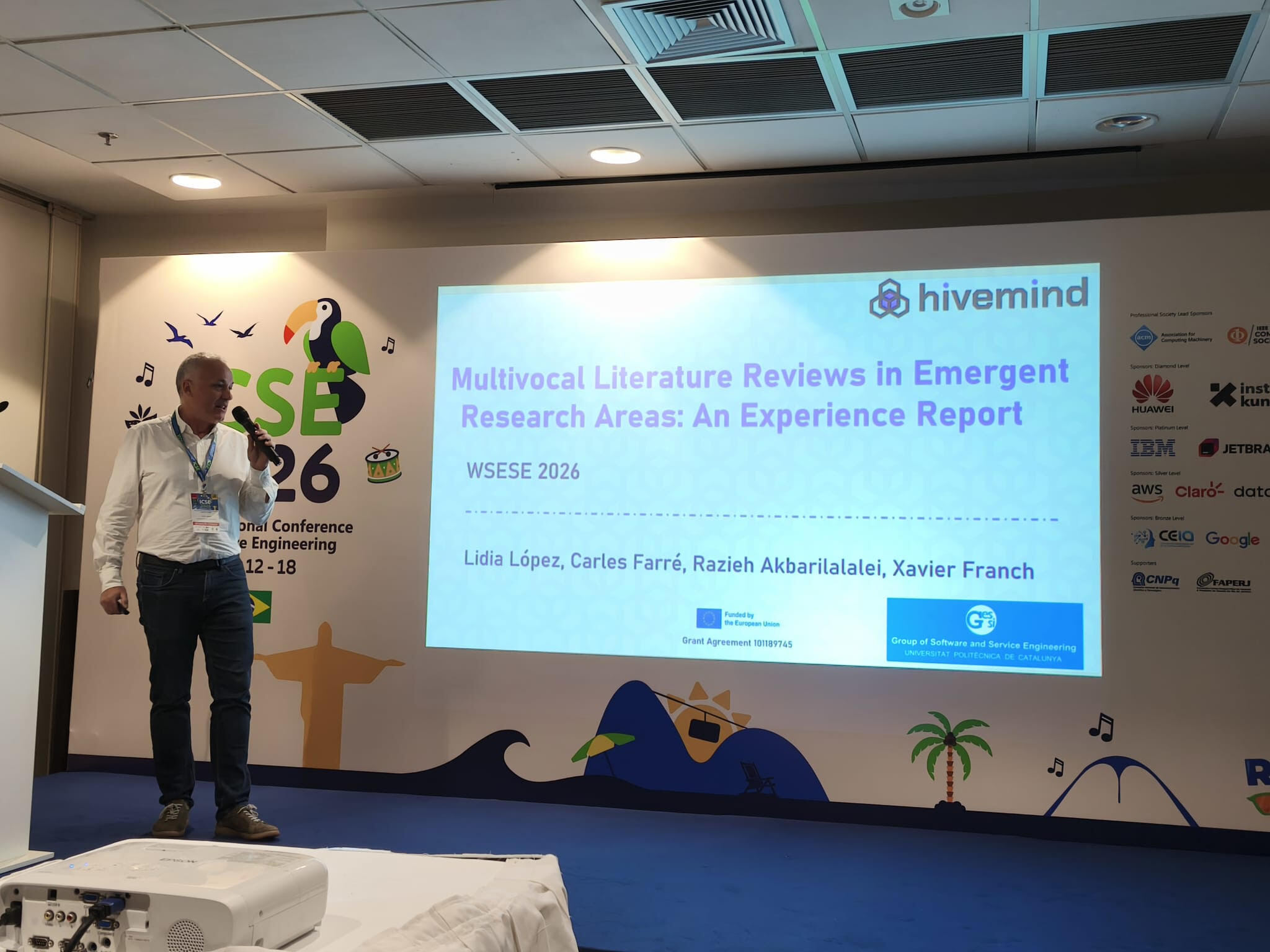
At WSESE, he presented “Multivocal Literature Reviews in Emergent Research Areas: An Experience Report”, co-authored with Lidia López, Carles Farré and Razieh Akbarilalaei. The paper examines the challenges of studying Generative AI agents and multi-agent systems for Agile project management in a rapidly developing field. It considers evidence maturity, preprints, grey literature and ways to maintain research quality while responding to frequent technological change.
Dependable computing in an agentic era
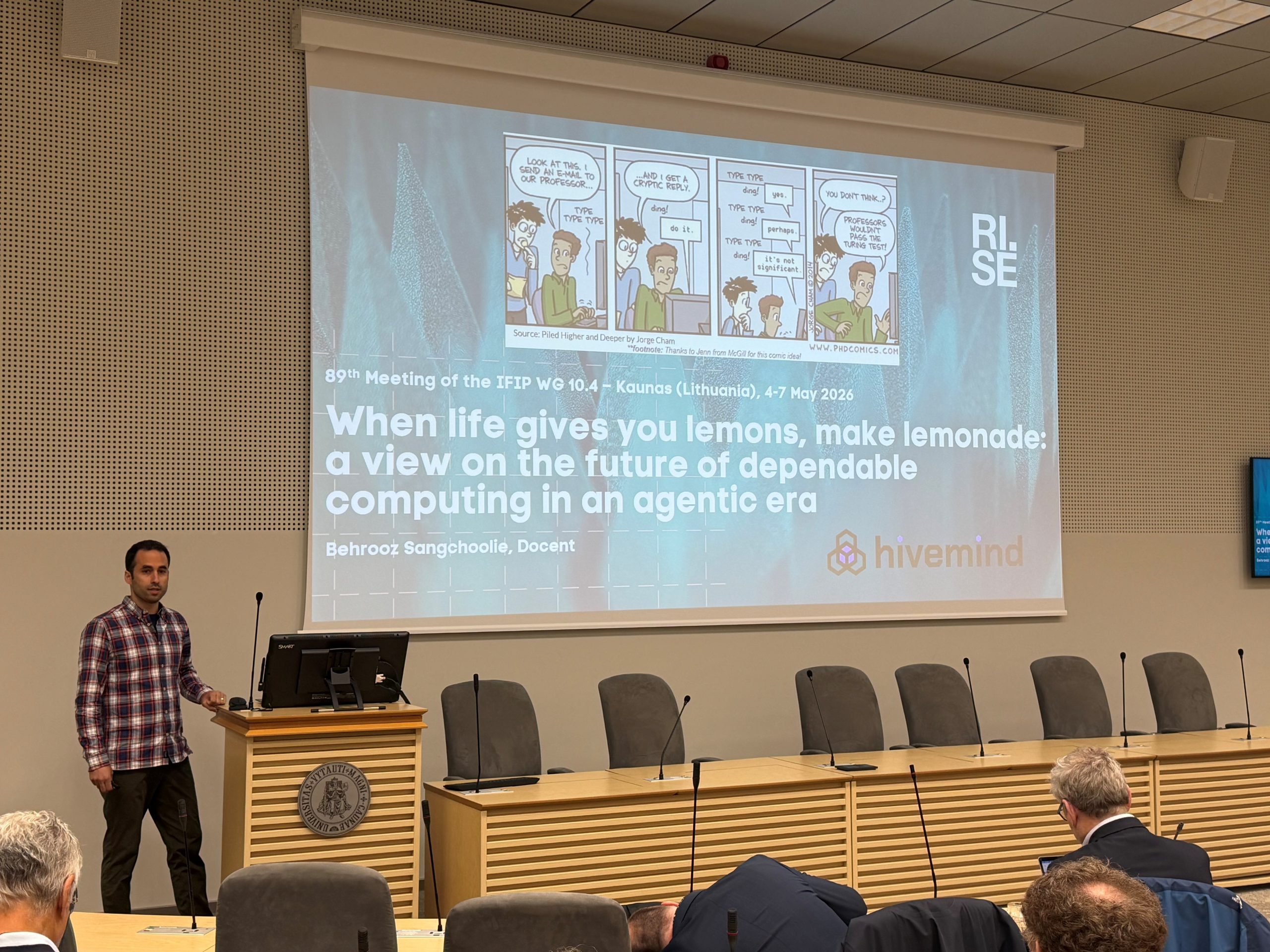
On 6 May, Behrooz Sangchoolie from RISE Research Institutes of Sweden participated in the IFIP Working Group 10.4 Workshop in Kaunas, Lithuania.
His talk, “When life gives you lemons, make lemonade: a view on the future of dependable computing in an agentic era”, considered how the growing use of AI agents may affect the reliability, availability, safety and security of computing systems.
Behrooz also introduced HIVEMIND and RISE’s work on software quality and testing agents.
Disaster management at ACİLTEK 2026
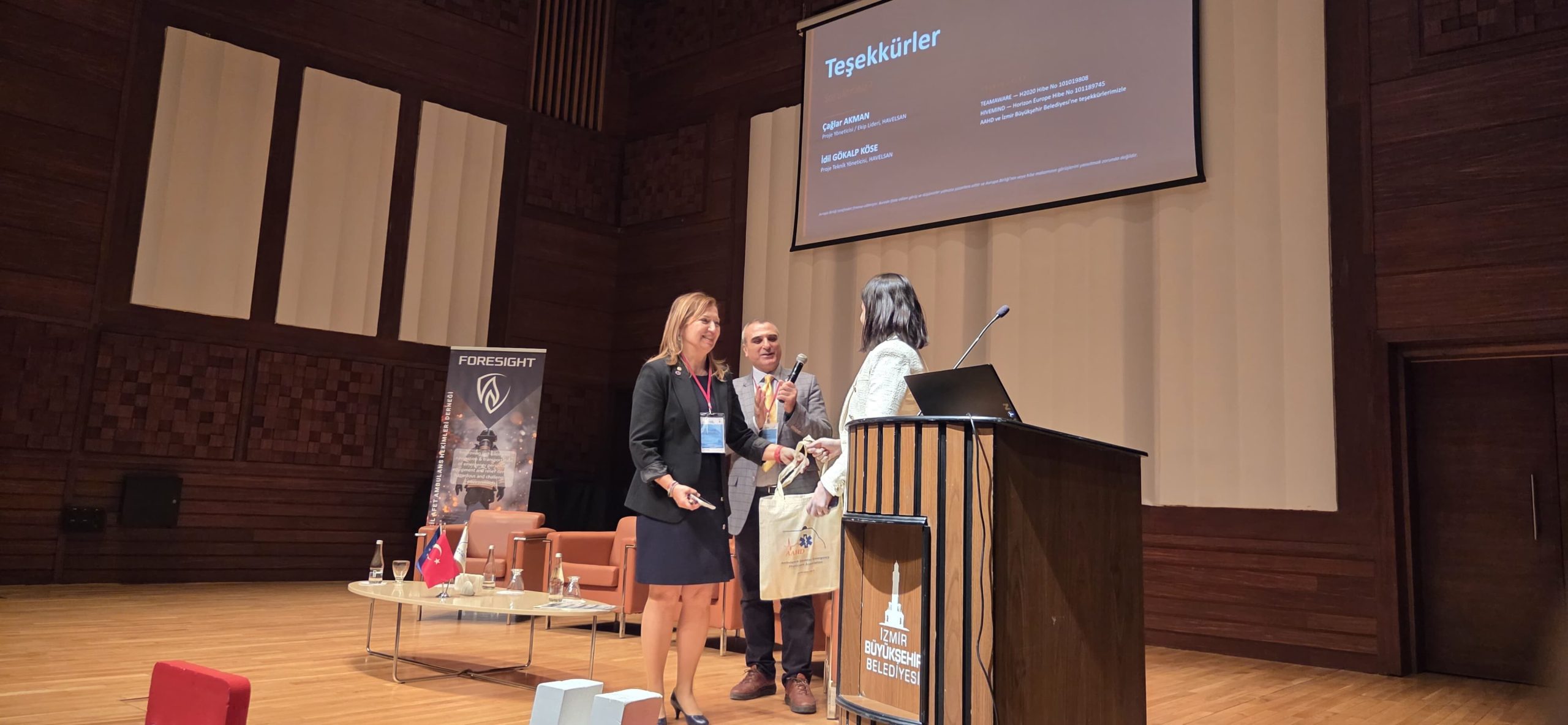
İdil Gökalp Köse from HAVELSAN represented HIVEMIND at the ACİLTEK 2026 Symposium in İzmir, which focused on technologies for emergency response, disaster management, public safety and crisis coordination.
HAVELSAN presented the project’s disaster management use case, centred on a mobile application for complex emergency environments. The work examines how specialised AI agents can assist software professionals in developing and maintaining systems used under demanding conditions.
Multilingual and scientific language resources at LREC 2026
At the Language Resources and Evaluation Conference 2026, held from 11 to 16 May in Palma de Mallorca, Fabio Barth from DFKI presented two works developed within HIVEMIND: “PolyglotQL: A Pipeline for Multilingual Text-to-SPARQL Dataset Generation” and “SciLaD: A Large-Scale, Transparent, Reproducible Dataset for Natural Scientific Language Processing”. Both datasets are accompanied by transparent preprocessing pipelines and represent valuable assets for advancing trustworthy and reproducible AI model training.
TaskGenAgent presented in Tampere
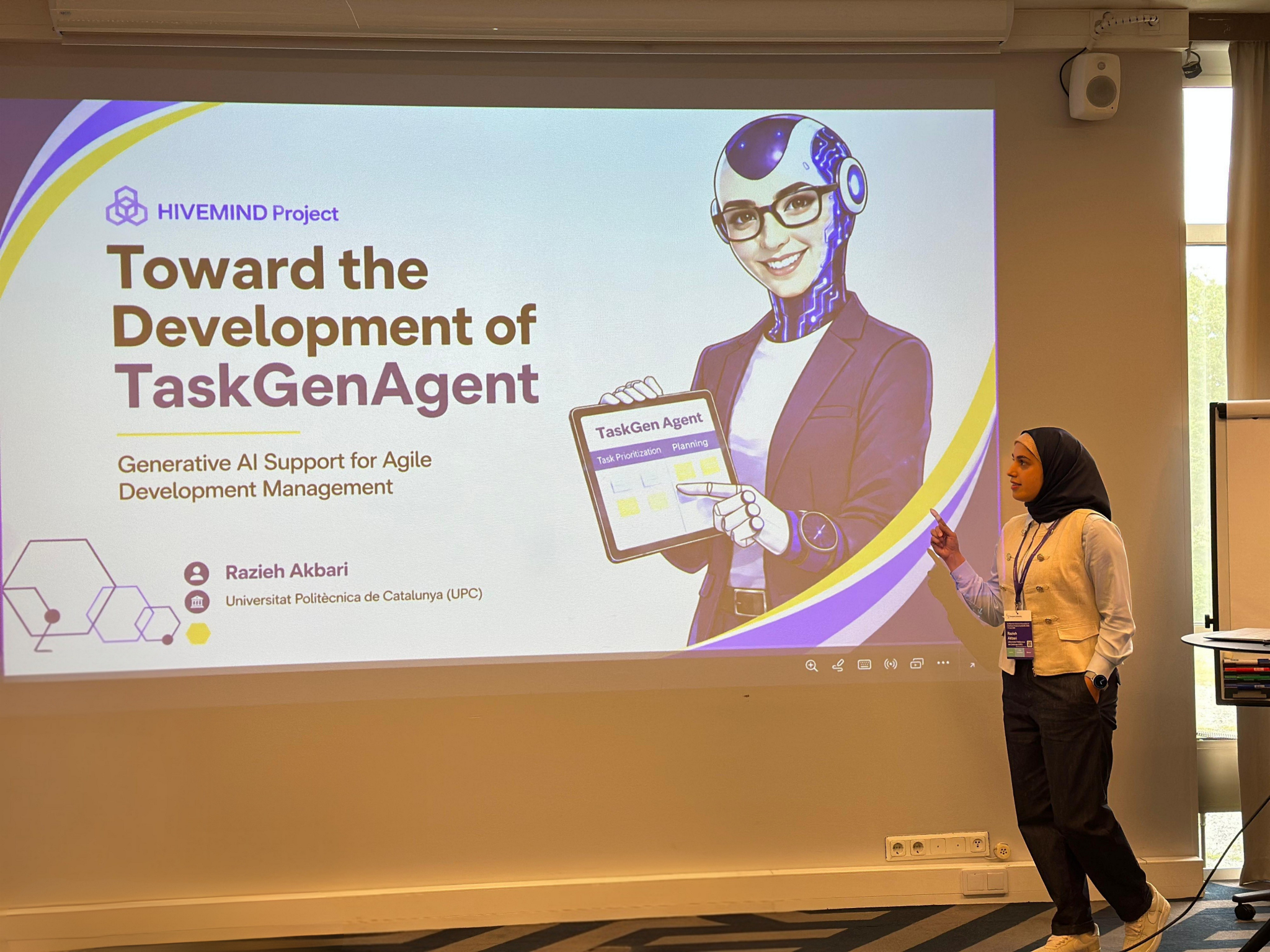
Razieh Akbari from Universitat Politècnica de Catalunya took part in the Generative AI in Software Engineering Summer School 2026, held from 1 to 3 June in Tampere. During the PhD Session, she presented “Toward the Development of TaskGenAgent: Generative AI Support for Agile Development Management”.
Developed within HIVEMIND, TaskGenAgent explores how Generative AI can support Agile task management and coordination. The presentation outlined its motivation, intended role and initial technical direction.
Multi-agent testing for autonomous driving systems
On 1 June, Konstantinos Koufos from Queen’s University Belfast presented HIVEMIND-related research at the Autonomous Driving Workshop of the IEEE International Conference on Robotics and Automation 2026.
The poster, “Collaborative Multi-Agent Testing for Emergent Failure Discovery in Autonomous Driving Systems”, introduced CREAD, a framework that uses specialised agents to generate perturbations, validate results and adapt the testing process. Its purpose is to improve the discovery of unexpected failures in autonomous driving environments. The work was prepared by Ruizhen Gu, Konstantinos Koufos, Donghwan Shin, Vahid Garousi and Mehrdad Dianati.
Mapping datasets for requirements engineering
On 11 June, Quim Motger from Universitat Politècnica de Catalunya presented “Characterizing Datasets for LLM-based Requirements Engineering: A Systematic Mapping Study” at EASE 2026 in Glasgow.
The study mapped 62 datasets covering requirements elicitation, specification, modelling, analysis, verification and validation. Its findings have supported the development of ElicitAgent, the HIVEMIND agent dedicated to requirements elicitation.
Access the materials
The publications, datasets and other materials presented at these events are available in the HIVEMIND Resources section.